Kristy Wheeler, MSN, RN, CNOR
Background and Initiative Overview:
Kristy Wheeler, MSN, RN, CNOR, worked nearly 7 years to pass a law in Maryland regarding surgical smoke evacuation in procedural areas, House Bill 1087. HB 1087 passed in May 2026, making Maryland the 21st state to enact such legislation. HB 1087 begins its implementation in January 2028 and will require the use of specific smoke evacuation equipment so that nurses and those exposed in operative or surgical areas are not inhaling the smoke.
The electric surgical unit (ESU), also referred to as a “Bovie,” is a tool used for cauterizing tissues in operating rooms or surgical units. During procedures it burns tissue, creating smoke. “We have been studying this smoke since the 1960s and it has a lot of bad things in it … the surgical masks we wear do not filter out the smoke. … staff is in the OR several days a week and [exposure] is a lot higher than surgeons.”
“Being in the OR [operating room] for a day is equivalent to smoking 27-30 unfiltered cigarettes per day, that’s how bad the smoke is.”
Project Implementation:
Kristy said she got started on this project as an active member in Association of periOperative Nurses (AORN). AORN Guidelines for Perioperative Practice serve as nationally recognized evidence-based recommendations and accreditation organizations, like The Joint Commission, reference these standards to evaluate patient safety. In 2018 and 2019, surgical smoke became a hot topic at AORN, “we’ve known about this since the 1960s, we have the data, we have the research, why can’t we get this implemented into the hospitals? … we have the equipment available.”
Initially, AORN went to the Occupational Safety and Health Administration (OSHA) and urged them to take action on this issue. When federal action wasn’t taken, AORN began a campaign to go state by state addressing this issue with the AORN Legislative Affairs liaison working with the Maryland Nurses Association (MNA) lobbyist to take action.
Kristy started working on this topic in 2019. Unfortunately, as their organizing strategy began, COVID-19 hit in 2020 and much of the work ceased. However, there was research published during the pandemic demonstrating that COVID-19 could be passed via surgical smoke so this supported surgical smoke evacuation.
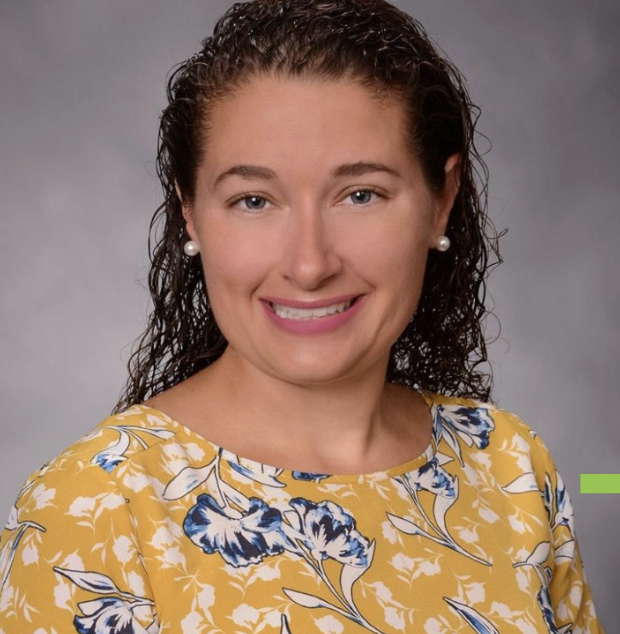
Kristy got more involved with the MNA stating “If you want to pass legislation in this state – any state, that is the group [local chapters of American Nurses Association] you need to get involved with.” Regarding her persistence in keeping this topic at the forefront of everyone’s priorities Kristy states that “I was like the Energizer bunny – I just kept beating my drum” developing her elevator speech and talking to anybody who would give time to talk about the importance of this bill.
Kristy did numerous presentations with stakeholders whenever she could, attending every opportunity including MNA Legislation Night at the State Capitol in Annapolis. She did so much education on surgical smoke, that her hospital, University of Maryland, won the AORN “Go Clear” Award in 2019 at the Bronze Level.
Leadership at MNA decided to take on the bill, “knowing I was very passionate about this”. House Delegate Steve Johnson ended up sponsoring the bill bringing it forth at the end of March in 2026. When the bill was heard by the House of Delegates Health Committee, Kristy and others testified in favor. The bill passed out of committee and passed the House 100%, however it didn’t pass the Senate until close to midnight in May 2026, passing unopposed. Constituent nurses like Kristy were utilized as experts for the legislation.
Collaborators:
Kristy notes that it took a tremendous amount of preparation, “It took 7 years and it all came together in 3 months.” Groups like Certified Registered Nurse Anesthetists (CRNAs) played a huge role in supporting this project due to their high level of exposure. Kristy talked with many groups and posted a lot on social media during the campaign. It was important that the bill was not opposed by key groups including the Maryland Hospital Association. AORN and MNA provided talking points for testimony and additional support, including template language for the legislation itself.
Challenges and Solutions:
There was no opposition to the bill. Kristy stated that In Maryland, “our bill couldn’t cost any money because we have to have a balanced budget.” Therefore, having the support of nursing groups like AORN and MNA made it easier to clarify financial questions and potential costs with the bill. There were no associated costs, also called a fiscal note, attached to the bill.
Results and Impact:
On May 26th 2026, the bill was signed by Governor Wes Moor and Kristy was invited to attend the bill signing, having the opportunity to meet the Governor. The bill takes effect in January 2028, giving facilities time to prepare, buy equipment and make plans for implementation.
“There were definitely hospitals in the state already doing this [implementing the bill directive] before the bill.”
In Kristy’s current role at the hospital, she works as part of a team looking at the scope of the bill and determining which parts of the hospital system the legislation could impact. Since she knows the law quite well, she has been part of the creation of a written draft policy for the health system, currently undergoing the approval process. The hospital system is proactively working to have policies in place before the 2028 implementation deadline.
Advice for Nurses Starting Similar Initiatives:
“You definitely need to get the backing of your state nurses’ association … I feel like that’s really the backing because that’s the political power.” Then you need to know “what are your facts, what is your endgame, what are you hoping to accomplish?” You have to then think about your stakeholders and who could support you and potential opposition. “Doing your homework and knowing what you are actually seeking” is an important part of this work. “I was very fortunate that AORN had done the work for me, “I just had to plug it into Maryland.” Kristy did a tremendous amount of education and advocacy before the bill hit the floor in March 2026. “It does take a lot of groundwork … I do hear the average to get a law through is 7 years” so she notes she is right on track with her work starting 7 years ago. The endurance of sticking with the topic for years or so is critical “you never know who is going to be the person to take it to the next level for you.”
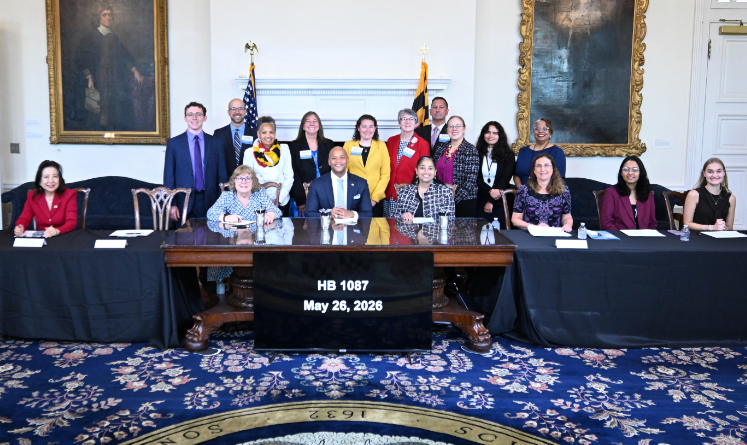
Kristy Wheeler is in the yellow jacket behind the Governor at the HB 1087 Bill Signing on May 26, 2026.
You can check out an article featuring Kristy Wheeler’s work here and her video ”The Power of Saying YES.”
For more information, check out AORN: Surgical Smoke-Free OR, Everyone Deserves a Smoke-Free OR
You can also read AORN’s Fact Sheet on Surgical Smoke